
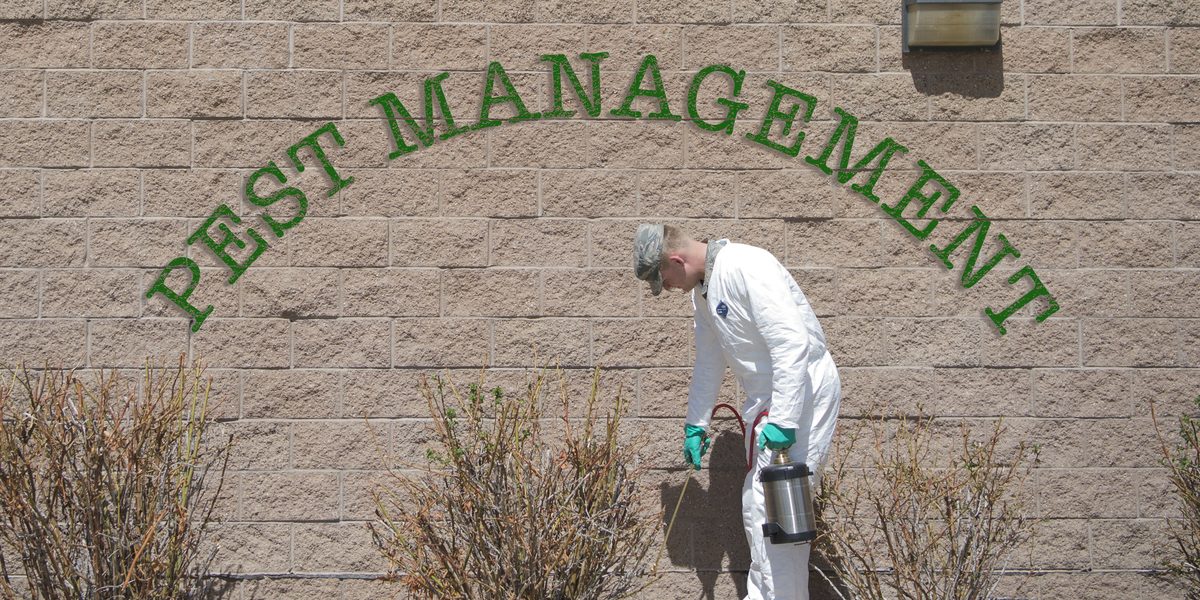
Same truck, different licenses - and different CE meters running
Texas structural pest control licensing is a ladder, and every rung has its own training and CE rules. People regularly buy the wrong continuing education because they know their job title but not their license type. Here is how the ladder actually works.
Apprentice
The entry rung. An apprentice registers with TDA, completes required initial training, and works under direct supervision while learning the trade. Apprenticeship is time-limited by design — it is the path to a technician license, not a place to stay.
Technician
A technician has completed the required training and exam and can perform pest control work under the supervision of a certified applicator. Technicians carry their own annual training requirement: 8 hours of verifiable training each calendar year. If you ride the route and treat accounts but did not sit for the category exams, this is almost certainly you.
Certified Applicator (Commercial and Noncommercial)
A certified applicator passed the general standards exam plus one or more category exams — pest control, termite/wood-destroying insects, lawn and ornamental, and other specialized categories such as fumigation and weed control. Commercial applicators work for licensed pest control businesses serving the public; noncommercial applicators do the same work for an employer that is not in the pest control business — think school districts, hospitals, food plants, and property management.
The annual CE requirement is the same for both: 1 CEU in each certified category plus 2 general CEUs, with at least one general credit in laws, safety, environmental protection, or IPM.
The Business License and the Responsible Certified Applicator
Pest control businesses hold their own TDA license, and every business must designate a responsible certified applicator — the license holder accountable for the company's compliance. If that is you, your personal renewal is also the company's problem: a lapsed RCA license puts the business's ability to operate at risk.
Why This Matters When You Buy CE
- Technicians count hours — eight of them, verifiable, every calendar year.
- Certified applicators count credits by type — category credits matching their certifications plus the two general credits.
- Both run on the calendar-year clock, with credits earned the year before renewal.
Our structural series serves the whole ladder from one catalog: eight standalone 1-CEU classes. Certified applicators can buy a 3-CEU category bundle today — General Pest Control, Termite & WDO, or Lawn & Ornamental, each two general classes plus the category class — and every class counts toward a technician's 8 hours. Technicians can take the Full Technician Annual: all eight classes, 8 CEUs, $99.99.
Every Structural CEU, One Provider
Pick the 3-CEU bundle for your certification category - General Pest Control, Termite & WDO, or Lawn & Ornamental, $69.99 each - or take all eight classes in the Full Technician Annual, 8 CEUs for $99.99. Every class TDA SPCS approved.
Choose Your Bundle - From $69.99TDA SPCS Approved | 3-CEU & 8-CEU Bundles | Online, Self-Paced